
Network on Humanitarian Action
International Association of Universities
Network on Humanitarian Action
International Association of Universities
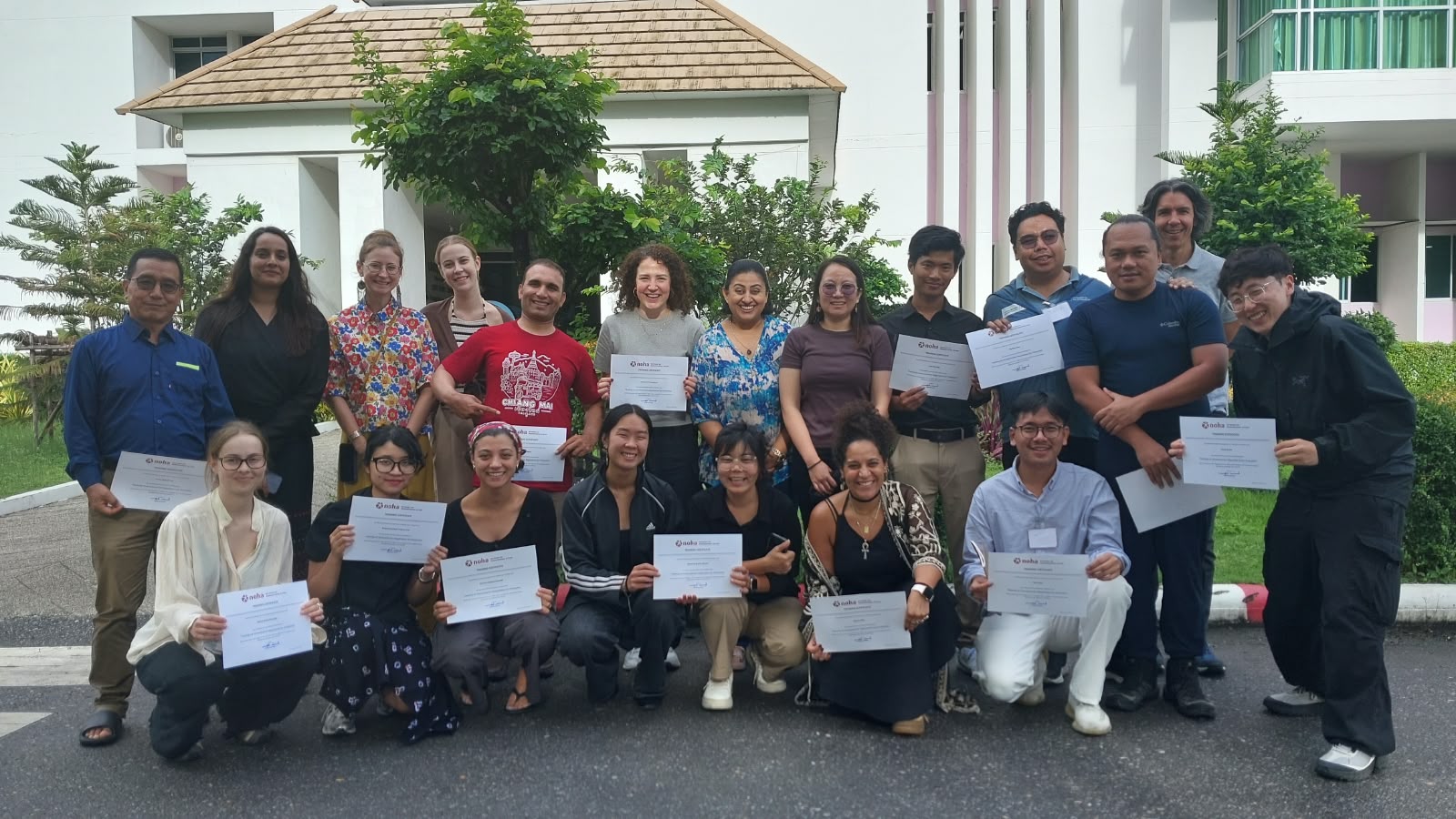
From 17–21 August 2026, NOHA held a five-day training on Humanitarian Negotiation for Protection in Chiang Mai, Thailand. The training brought together 21 humanitarian practitioners, frontline workers, peacebuilders and other professionals to develop practical skills for using negotiation to strengthen civilian safety and security and reduce protection risks. The training formed part of the Consortium for Civilian Safety and Security, a collaboration between NOHA, ODI Global and Nonviolent Peaceforce, supported by the Belgian Ministry of Foreign Affairs. The consortium's training programme explores practical strategies for reducing threats of violence to civilians affected by conflict.
Using negotiation to protect civilians
Unlike humanitarian negotiations that focus primarily on securing access or facilitating the delivery of aid, the Chiang Mai training placed civilian protection at the centre of the negotiation process.
Participants explored how engagement with armed actors, state authorities, communities and other stakeholders could be used to address specific protection threats, including violence against civilians, forced displacement and restrictions on humanitarian access.
The training examined how negotiation could contribute to:
Learning through negotiation and simulation
A central feature of the training was its practical and experiential approach. Around 70% of the programme was dedicated to participatory activities, skills-based exercises and role plays, giving participants opportunities to practise negotiation techniques and receive feedback throughout the course.
Participants worked through the different stages of a humanitarian negotiation, from analysing the context and interlocutors to developing a negotiation mandate and strategy. They explored how to identify the positions, interests and motivations of interlocutors, build trust and rapport, communicate effectively and use appropriate influencing techniques.
Through simulations, participants also practised dealing with difficult interlocutors, developing options and alternatives, establishing red lines and identifying and mitigating the risks associated with humanitarian negotiations.
From access negotiations to protection outcomes
A key theme throughout the training was the question of how negotiation can be deliberately used to achieve protection outcomes.
Participants considered when negotiation or mediation may be the most appropriate approach, what conditions are necessary for successful engagement, and how humanitarian actors can navigate the ethical challenges and risks involved in negotiating with parties to conflict.
The training therefore linked negotiation skills to broader protection practice, including community engagement, accountability to affected populations, protection mainstreaming and safe programming.
The training was facilitated by Jérôme Grimaud, a humanitarian practitioner and accredited mediator with extensive field experience in protection, humanitarian access, negotiation and mediation. His experience included frontline negotiations and humanitarian mediation in a range of conflict settings.
This site uses cookies to enhance user experience and to track usage statistics. For more information, see NOHA’s Data Privacy Policy.